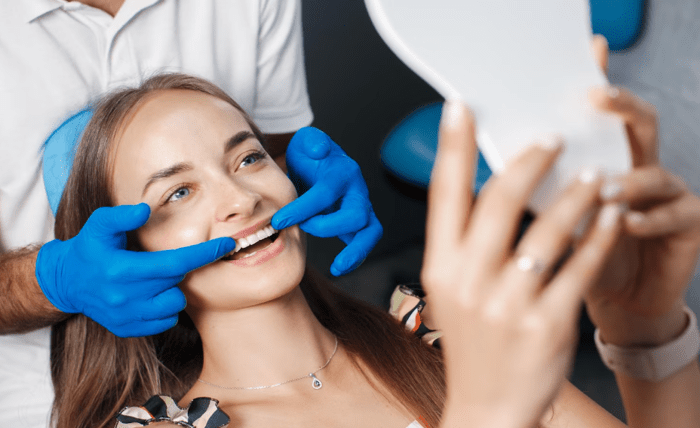
Veneers have topped the cosmetic request list for international patients travelling to Turkey for more than a decade, and 2026 has done nothing to slow that down. Three factors keep the demand there: the visual change is dramatic, the timeline is short enough to fit a single trip — most cases finish inside 5–7 days — and the pricing runs 60–80% below UK equivalents. Antalya has captured a large share of that market, and Dental Harmony Turkey handles veneer packages for overseas patients with English-language coordination running from the first assessment through to the final bonding appointment.
What a Veneer Is, and What It Commits You To
A veneer is a thin shell of ceramic or composite bonded to the front face of a natural tooth. Unlike a crown, which encases the whole tooth, a veneer covers only the visible surface, which in most cases means very little healthy tooth structure is removed. They are used to alter shape, size, colour and the apparent alignment of teeth — a new smile without orthodontics. There is one point that deserves more emphasis than it usually gets in consultations: a tooth prepared for a veneer will need a veneer or a crown on that surface for the rest of its life. This is a long-term decision, not a reversible cosmetic treatment.
The Three Materials Available in Turkey
Porcelain veneers are what most international patients arrive asking for. Porcelain is strong, highly resistant to staining, and semi-translucent in a way that reads as natural rather than manufactured. They are made in a dental laboratory from impressions or digital scans and cemented to the prepared tooth with a strong bonding resin. Looked after properly, they run 10–15 years and often longer.
E-max veneers are made from lithium disilicate, a ceramic prized for how it transmits light — closer to the behaviour of natural enamel than any other material in routine use. That makes it the material of choice for upper front teeth, where the eye is least forgiving. Dental Harmony Turkey’s E-max crowns in Antalya and veneer service uses lithium disilicate specifically for patients prioritising anterior aesthetics, with shade and light transmission matched to the neighbouring natural teeth.
Composite veneers are built directly onto the tooth in one appointment with no laboratory stage. They cost less than ceramic and they last less time, staining more readily over the years. Their real strengths are immediacy and reversibility: they suit patients who want a result today at lower cost, or who want to live with a new shape before committing to ceramic.
2026 Veneer Price Comparison
| Country / Region | Average Cost | Notes |
| UK (porcelain, per tooth) | £500 – £1,200 | Harley Street and London practices above this range |
| Germany (per tooth) | €400 – €1,000 | Not covered by statutory insurance; private only |
| Netherlands (per tooth) | €450 – €1,000 | Private market; strong demand for Turkish alternatives |
| Turkey (Dental Harmony Turkey) | £225 – £300 | Porcelain or E-max; package pricing for 6, 10, 20 teeth |
How Package Pricing Works
Most patients treat somewhere between six and ten teeth to cover the full smile zone, though plenty do less — often just the upper four to six that show when talking. Dental Harmony Turkey prices multiple veneers as a package within a single visit, with the per-tooth figure easing slightly as the number rises. The important caveat is that a package is a pricing structure, not a treatment plan. The number of teeth, the shade and the shape all belong to a design consultation about your face and your teeth, not to a standard template applied to everyone.
The Treatment Timeline in Turkey
- Remote consultation — Photographs are submitted; the clinic assesses tooth condition and opens the conversation about expectations and shade.
- Digital smile design — On arrival, a digital preview of the intended result is produced where available, for approval before anything is prepared.
- Shade and shape selection — Shade guides and shape templates are reviewed and the final design agreed in writing.
- Tooth preparation — A thin layer of enamel, typically 0.3–0.7mm, is removed from each tooth; impressions or digital scans go to the laboratory.
- Temporary veneers — Temporaries are placed while the permanent set is fabricated, usually 2–3 days in Antalya’s in-country laboratories.
- Final bonding — Fit, shade and margins are checked, the veneers are bonded with light-cured resin cement, and the bite is adjusted and polished.
Settle These Before You Book
- Porcelain, E-max or composite — and, more usefully, what the dentist recommends for your particular teeth
- The exact shade. Ask to hold a physical shade guide; ultra-white looks very different in person than it does in photographs
- Whether preparatory work is needed first — decay, gum health, or whitening of teeth that will not be veneered
- The clinic’s policy if a veneer chips or debonds after you are home
- Whether a night guard is being recommended, and why
How Long Do Veneers Last?
Porcelain and E-max average 10–15 years with good hygiene and no grinding. That last condition is the one that matters most: anyone who clenches or grinds should raise it before treatment starts, because a night guard is strongly recommended to protect the restorations from nocturnal wear, and skipping it shortens their life considerably. Composite veneers run 5–7 years and need occasional polishing or minor repair along the way.
Final Thoughts
Veneers in Turkey remain one of the clearest value propositions in cosmetic dentistry for international patients — the materials match what UK and European laboratories use, the timeline fits one trip, and across a package of six to ten teeth the difference in cost is substantial. For patients searching for the Best Dentist in Antalya to handle a smile makeover, Dental Harmony Turkey provides a full cosmetic assessment, a digital preview of the result, and ceramic fabrication within a single visit.